 Pin It
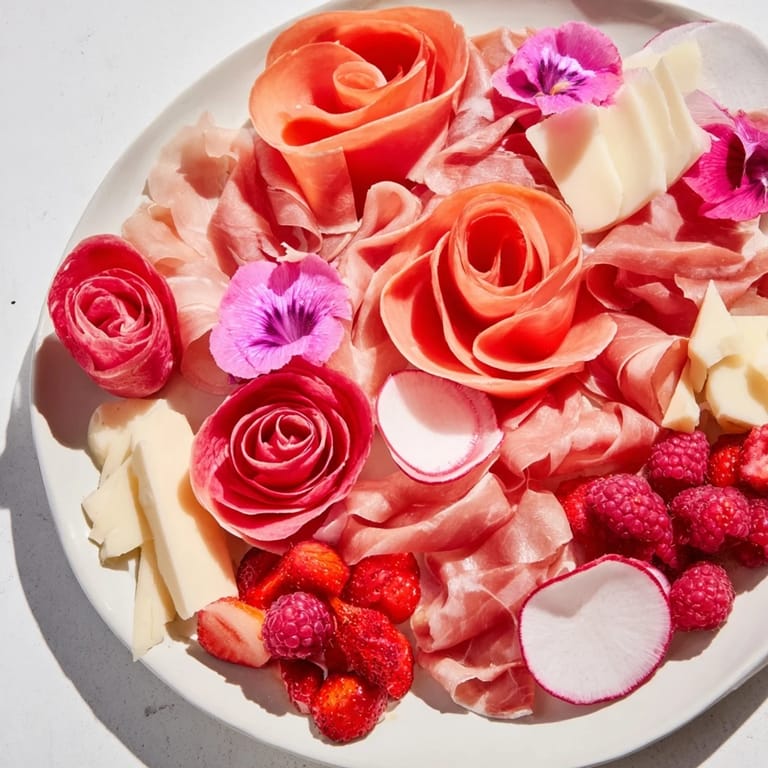
 I still remember the afternoon I discovered that a platter could be a work of art. I was preparing for my sister's spring engagement brunch, standing in my kitchen with a jumble of pink ingredients scattered across the counter—rosy prosciutto, vibrant radishes, delicate berries—and it suddenly clicked. Why arrange food in the usual way when you could paint with it? That day, I created the Pink Petal Watercolor Wash, and it became the dish that transformed how I think about entertaining. Now, every time I build one of these platters, I'm reminded that the most memorable meals are often the ones that make your guests pause and simply admire before they eat.
The first time I served this to a group, I watched my friend's eyes widen as she walked into the dining room. She literally stopped mid-conversation. That's when I knew this wasn't just food—it was a moment. Now, whenever I want to make people feel celebrated without the stress, I reach for this platter. It's become my signature move for spring gatherings and the kind of appetizer that makes everyone feel like they're at a much fancier event than it actually was to prepare.
Ingredients
- Prosciutto, thinly sliced (100 g): The key here is buying it sliced to order at the counter if you can—it's more delicate and roses beautifully. When you roll each slice gently, you're creating little edible sculptures that catch the light.
- Mortadella, thinly sliced (100 g): This adds a softer, almost creamy contrast to the prosciutto. The way it folds creates natural movement on the platter, like fabric caught in a breeze.
- Pink radishes (6–8 small): These are your base color notes—slice them paper-thin on a mandoline if you have one, and you'll see how they become almost translucent and delicate.
- Watermelon radish (1): I learned the hard way to slice this last, just before serving, because it oxidizes and loses that stunning pink-and-white striped interior. When you catch the light just right, it looks like watercolor paint bleeding across paper.
- Beet, cooked and thinly sliced (1 small): Roast or boil yours ahead of time and let it cool completely. This is your deepest pink anchor—place it where you want to draw the eye.
- Pink-hued cheese—port wine Derby, rosé goat cheese, or berry-washed rind (100 g): Hunt for one of these at a good cheese counter. They're the secret that makes this platter feel intentional and special, not accidental.
- Brie or camembert, cut into wedges (100 g): The creaminess balances all the delicate vegetables and cured meats. I always include at least one wedge with the rind visible—that natural edge adds authenticity.
- Baguette, sliced (1 small, or gluten-free crackers): Toast the slices lightly if you have time—it keeps them from getting soggy and adds a gentle crunch that plays beautifully against the soft cheeses.
- Rice crackers (1 package): These add textural variety and a neutral canvas for guests to build their own bites.
- Fresh strawberries, halved (1 cup): The brightness of fresh strawberries ties the whole color story together. Prep them just before plating so they stay glossy and fresh-looking.
- Raspberries (1 cup): These are almost too pretty to eat, but they also add a tartness that keeps the richness of the cheese and meat in balance.
- Edible rose petals or microgreens (optional): If you can find these, they're the finishing touch that says you really thought about every detail.
Tired of Takeout? 🥡
Get 10 meals you can make faster than delivery arrives. Seriously.
One email. No spam. Unsubscribe anytime.
Instructions
- Set your stage:
- Start with your largest, most beautiful platter or board as your canvas. I always use one that's light-colored so the pinks and reds really sing. Take a breath and arrange everything within arm's reach—this should feel meditative, not rushed.
- Create your prosciutto roses:
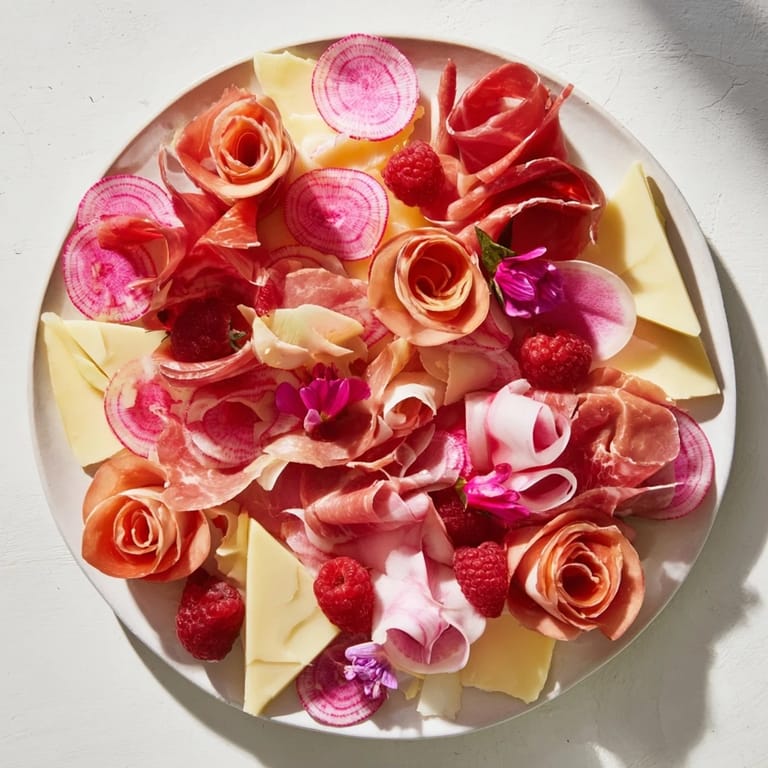
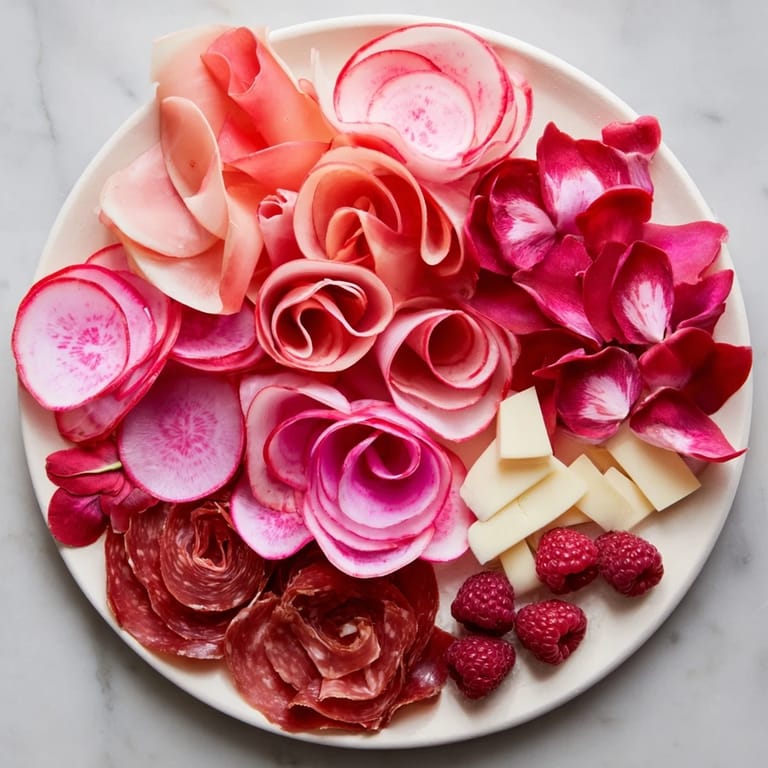
- Take each slice of prosciutto and gently roll it or fold it into a loose rose shape. The beauty is in the imperfection, so don't stress about making them perfect. Arrange these in small clusters across the platter, leaving room for the other elements to breathe around them.
- Layer the mortadella:
- Create loose, folded layers of mortadella beside your prosciutto clusters. Let the folds be soft and organic—you're going for gentle movement, not precision.
- Paint with radishes:
- This is where the watercolor effect really comes to life. Take your pink radish slices and arrange them in overlapping, slightly fanned layers. Scatter some, layer others. Let them mingle with the cooked beet slices. You're mimicking watercolor brush strokes, so the edges can blur and blend.
- Nestle in the cheese:
- Place your pink-hued cheese slices and brie wedges in clusters, allowing their soft edges to visually blend with the meats and vegetables around them. Cheese is your transition color—it bridges all the different elements.
- Add bread and crackers with intention:
- Arrange baguette slices and rice crackers in gentle curves along one edge, or intersperse them throughout. These should feel placed, not scattered.
- Scatter the berries:
- Add strawberries and raspberries in small piles to enhance the pink palette. They're both beautiful and functional—guests can snack on them alone or pair them with cheese.
- Finish with grace:
- If you have edible rose petals or microgreens, scatter them across the platter now. Step back and look at it. Adjust if something feels out of balance, but chances are, it already looks stunning.
- Serve with joy:
- Bring it to the table and let people admire it for a moment before they dive in. This is the magic of it—that pause when everyone realizes they're not just eating, they're experiencing something beautiful.
 Pin It
 I'll never forget when my grandmother saw this platter for the first time. She's someone who values both beauty and nourishment, and I watched her understand that this dish was both. She spent fifteen minutes just looking at it, telling me stories about the colors and flavors of her childhood garden. That's when I realized this platter isn't just about impressing people—it's about creating a moment where food becomes memory.
The Art of Color Harmony
The secret to making this platter truly stunning isn't actually about the ingredients themselves—it's about understanding how to play with monochromatic color. Every pink, every red, every coral on this platter is a different shade, and when you arrange them next to each other with intention, they create visual movement. Think of it like you're actually painting. The prosciutto is your darkest value. The pale radish slices are your lightest. The beet is your deepest, most saturated color. When you layer them, you're creating depth on a flat surface. That's the watercolor effect—it's not magic, it's thoughtful composition.
Building Flavor Harmony
One thing I learned after making this platter a dozen times is that people's eyes land first, but their taste buds need to be satisfied second. The combination of salty (prosciutto, mortadella), creamy (cheese), fresh and crisp (vegetables), and bright (berries) means every bite is different depending on what someone chooses to combine. Encourage your guests to think of it like building their own composition—a little cheese with a strawberry, some radish with prosciutto, a cracker as a base for mortadella and beet. The platter is interactive, and that's what makes it memorable.
Making It Work for Your Crowd
I've learned that this platter is endlessly flexible, which is part of why it's become my go-to. For a vegetarian gathering, simply skip the prosciutto and mortadella, add more cheese varieties, and increase your vegetable range with things like sliced cucumber, thinly shaved fennel, or pickled pearl onions for tartness. For a smaller group, everything scales down perfectly. For a larger party, simply double the quantities and use a bigger board. The beauty of a platter is that it can absorb changes without losing its soul.
- If you're serving this outside, assemble it as close to serving time as possible—the sun can affect how the colors appear and how quickly items dry out.
- Have small plates and napkins nearby so guests can build their own bites without crowding around the main platter.
- Pair this with rosé wine or a crisp white—something that echoes the delicate pink theme of the whole spread.
 Pin It
 This platter has taught me that entertaining doesn't have to be complicated to be beautiful. Sometimes the simplest dishes—the ones that let good ingredients shine without fussy cooking—are the ones people remember most.
Recipe FAQs
- → How do you shape prosciutto into rose forms?
Fold or roll thin slices of prosciutto tightly to create small rose-like shapes. Arrange them gently for a natural floral appearance.
- → What cheeses work best for this pink-hued platter?
Soft, pink-tinted cheeses like port wine Derby, rosé goat cheese, or berry-washed rind cheeses complement the colors well, alongside creamy brie or camembert wedges.
- → Can this platter be made gluten-free?
Yes, substitute the baguette slices with gluten-free crackers to keep the platter suitable for gluten-sensitive guests.
- → How can the watercolor effect be achieved with vegetables?
Layer thin slices of pink radishes, watermelon radish, and cooked beet in overlapping, fanned arrangements to mimic gentle brush strokes and color blending.
- → What are some suggested garnishes to enhance presentation?
Edible rose petals or fresh microgreens add elegance and a subtle floral note, enhancing both look and flavor.
- → Is it possible to adapt the platter for vegetarians?
Omit all meats and increase the variety and quantity of cheeses and vegetables to maintain balance and visual appeal.