 Pin It
 I'll never forget the dinner party where I first assembled a wine-stained cheese board. My friend brought over a bottle of Pinot Noir, and I had just discovered these gorgeous drunken cheeses—aged in red wine until they blushed the most beautiful ruby color. That evening, as guests gathered around the board, watching them discover how the wine had transformed each ingredient, I realized this wasn't just about serving food. It was about creating a moment where every bite told a story of wine, time, and craftsmanship.
The first time I made this for a small gathering, I placed that empty wine bottle in the center of the board almost by accident—a dramatic gesture born from running out of small serving bowls. But watching the cheese lean against it, the way the light caught the ruby-stained edges of every ingredient, I understood that the emptiness of that bottle was the whole point. It represented what had been poured into everything surrounding it, a kind of edible poetry.
Ingredients
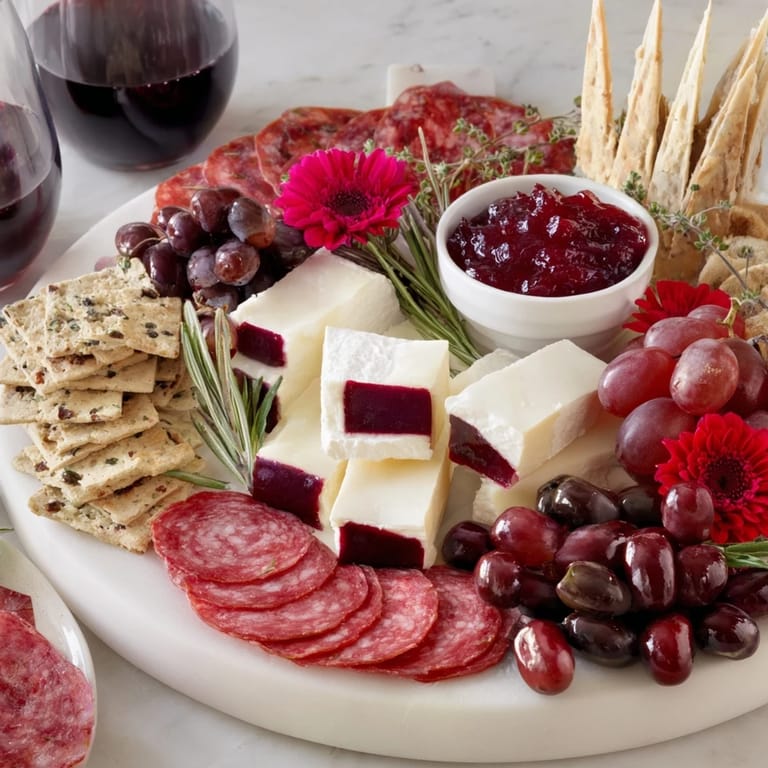
- Drunken Goat Cheese (200 g, sliced): This is the star—creamy goat cheese that's been aged in red wine until it takes on a gorgeous rose-colored exterior. The wine softens the tang and adds subtle berry notes that melt on your tongue. Slice it just before serving so the cut surface stays pristine.
- Red Wine BellaVitano (150 g, cubed): A hard, aged cheese with complex flavors deepened by red wine infusion. The cubes catch light beautifully and provide textural contrast. Look for it at specialty cheese counters; if unavailable, any red wine-aged hard cheese will work.
- Red Wine-Cured Salami (100 g, thinly sliced): The wine cure gives this salami a subtle sweetness and richness. Slice it paper-thin so it drapes elegantly and lets the wine flavor shine through without overpowering.
- Prosciutto (80 g, torn into ribbons): Salt-cured and delicate, prosciutto's silky texture contrasts beautifully with harder cheeses. Tear it gently just before serving—those ragged edges look more inviting than neat cuts.
- Red Wine Jelly (1/2 cup): This glossy, jewel-toned condiment adds a touch of sweetness and visual drama. Make it ahead or use a quality store-bought version; it's what catches everyone's eye first.
- Red Wine-Poached Grapes (1/2 cup): These are tender, wine-soaked grapes that burst with concentrated flavor. They're what convinced me that the entire board was worth doing—they're that good.
- Red Wine-Infused Dried Cherries (1/4 cup): Chewy, sweet, and wine-touched, these add jewel-like pops of color and flavor throughout the board. They're also a gateway fruit for people who think they don't like dried fruit.
- Red Wine-Marinated Olives (1/3 cup, kalamata or green): Briny and wine-deepened, these provide essential savory moments. I prefer a mix of both colors for visual interest, but follow your instinct here.
- Baguette (1 small, sliced): Toasted or fresh, baguette is the blank canvas that lets the wines and cheeses shine. Day-old bread actually works better—it's sturdier and less likely to crumble under the weight of toppings.
- Red Wine and Rosemary Crackers (1 cup): These specialized crackers echo the wine theme and add an herbal note. If you can't find them, use plain rosemary crackers or even good-quality plain ones.
- Fresh Rosemary Sprigs and Edible Flowers: These are your garnishes, your finishing touch. The rosemary releases aroma as guests reach across the board, and edible flowers add that final flourish of elegance.
Tired of Takeout? 🥡
Get 10 meals you can make faster than delivery arrives. Seriously.
One email. No spam. Unsubscribe anytime.
Instructions
- Set Your Stage:
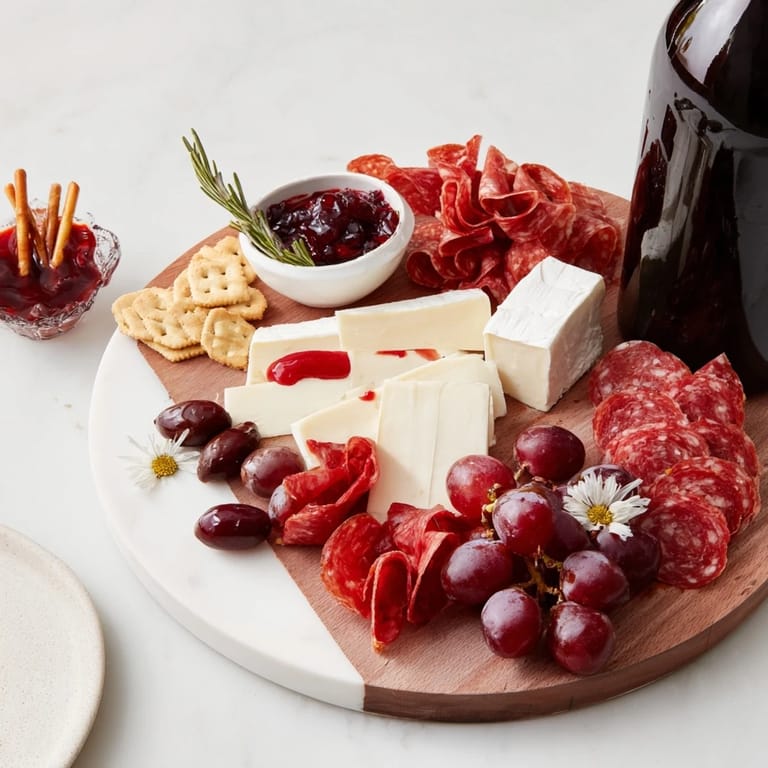
- Take a clean, empty wine bottle and remove any labels or decorative wrap that might distract from what you're creating. Place it in the dead center of your wooden board—this becomes your anchor point, the reason everything else will look intentional and beautiful. Step back and imagine the space around it filling with color.
- Build Your Cheese Foundation:
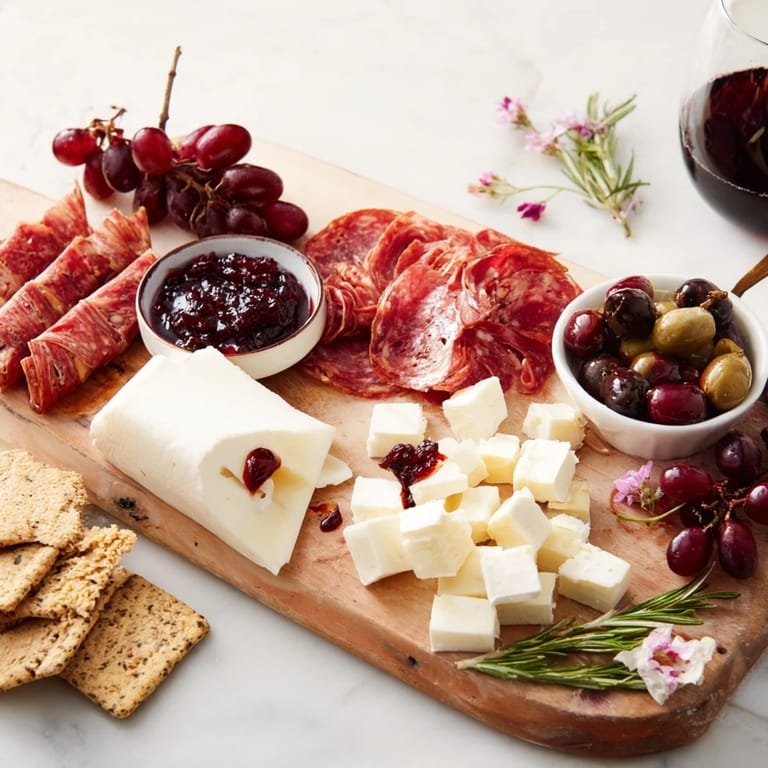
- Slice your drunken goat cheese into pieces about the size of your thumb and cube the BellaVitano. Arrange them around the base of the bottle, letting some pieces lean casually against it as if they've tumbled there by accident. This is where your board gets its architectural bones—trust the way the ruby-colored cheeses catch light.
- Layer in Cured Meats:
- Take your wine-cured salami and arrange thin slices in a small pile, then do the same with torn ribbons of prosciutto in another location. Think in clusters rather than scattering—your eye wants to find pockets of similar ingredients, like little flavor destinations.
- Nestle the Jelly:
- Pour your red wine jelly into a small bowl and tuck it into a gap among the cheeses. This glossy, wine-dark jewel becomes a focal point. It's practical and gorgeous—the kind of thing people will comment on.
- Scatter Your Poached Elements:
- Distribute the wine-poached grapes, wine-infused cherries, and marinated olives in small clusters throughout the board. Leave gaps; don't fill every space. The negative space is as important as what you place—it gives people's eyes somewhere to rest.
- Create Pathways:
- Arrange baguette slices and wine crackers in gentle arcs or lines around the board. These aren't just for eating; they're visual guides that invite people to begin. They're the invitation written in bread.
- Finish with Fragrance:
- Tuck fresh rosemary sprigs here and there, and scatter edible flowers if you're using them. This is where the board becomes complete—when it smells as beautiful as it looks, when approaching it becomes a full sensory experience.
- Bring It to Life:
- Set the board down where your guests will gather and encourage them to mix and match. The magic happens when someone takes a piece of wine-soaked cheese, adds a slice of salami, dabs it with jelly, and discovers their own perfect bite.
 Pin It
 What moves me most about this board is watching someone taste it for the first time. They pick up a piece of cheese, notice the wine-stained color, take a bite, and their eyes change. They suddenly understand that wine isn't just something you drink alongside food—it becomes part of the food itself, transforming it into something more elegant, more intentional. That's when a cheese board stops being a dish and becomes a story.
The Art of Wine-Soaked Ingredients
Understanding why these ingredients work together starts with understanding what wine does. When cheese, fruit, or meat soaks in wine, the alcohol and tannins penetrate slowly, adding layers of complexity that simple flavoring can't achieve. The sweetness of the grapes becomes deeper when poached in wine—it's not candy-sweet but sophisticated and rounded. The goat cheese loses some of its sharp edge and gains a subtle earthiness that makes it more welcoming. This isn't just cooking; it's a slow transformation that happens over weeks or months, depending on the ingredient. When you assemble a board like this, you're not just combining flavors—you're honoring that transformation by presenting all those carefully aged components together.
Choosing Your Wine for the Tasting
The wine you serve alongside this board matters as much as the wine that infused the ingredients. A fruity, medium-bodied red like Pinot Noir or Merlot won't overwhelm the delicate wine-soaked cheeses—instead, it echoes them, creating a conversation between what's on the board and what's in the glass. I learned this through trial and error, serving too-bold wines that drowned out the subtle flavors I'd worked to develop. Now I think of it like this: the wine in your glass should taste like a friend to the wine already present in every element on the board. They should complement each other, not compete.
Adapting for Every Occasion and Diet
This board is endlessly adaptable, which is part of why I love it. For vegetarian guests, simply omit the salami and prosciutto and double down on cheeses and accompaniments—add some roasted nuts or a small serving of herb-marinated artichoke hearts if you want to fill those gaps. For people avoiding gluten, set the bread and crackers on a separate small board rather than mixing them in; it keeps things clean and shows you've thought about their needs. For a smaller gathering, halve all the quantities but keep the bottle as your centerpiece—it still works, still feels special. The formula adapts because it's built on a principle rather than rigid rules. That principle is: every ingredient should taste like it's been touched by wine, and everything should work in concert with everything else.
- Keep vegetarian and meat versions visually separate so guests can easily identify what suits their diet
- Make your own red wine jelly the day before if you want to save time on serving day—it actually sets better with a little rest
- If you can't find wine-poached grapes, make a quick version by simmering grapes in red wine for just 5 minutes; they'll be warm and perfect
 Pin It
 This board is for the moments when you want to slow down and let food do the talking. When you're gathering people who deserve something beautiful, something that says you've thought about them and what they might love.
Recipe FAQs
- → How do I prepare the red wine-poached grapes?
Simmer seedless red grapes in a cup of dry red wine with sugar and a cinnamon stick for 10 minutes, then cool before serving for a sweet, infused flavor.
- → Can I make this board vegetarian?
Yes, simply omit the meats and increase cheese portions or add roasted nuts for extra texture and flavor.
- → What cheeses are used in this selection?
Drunken goat cheese soaked in red wine and BellaVitano (or similar) hard cheese infused with red wine cubed for contrast in texture and flavor.
- → How should I arrange the board for best presentation?
Center an empty wine bottle on a wooden board and arrange the cheeses, meats, and accompaniments in clusters around it for visual appeal.
- → What pairs well with this board?
A fruity, medium-bodied red wine like Pinot Noir or Merlot complements the wine-infused flavors and balances the rich textures.
- → Are there any allergen considerations?
This board contains milk, wheat/gluten, and sulfites from wine; optional meats may add additional allergens. Always check labels carefully.